This page is a continuation from the previous page.
Creation and I…
How are they related? Of course we are all a part of that, and made up of stuff that Universe owns, right? If that is the case, do we have an emotional connection with this owner, this universe? Do we actually think anything about this universe? In a way, Universe is our mother, and father too, right? Since we are made from it… Repeating it from the previous page (the “About” page), not understanding this relationship, not establishing an emotional connection, not relating our personal events to the universal events (or having a model for all of that) is at the root of all our problems and what we call “suffering”. A significant part of the solution to that is to establish that connection, to build a model.
So, let us take it granted for a while that we need to have a model as how and where we fit into the big picture. The big picture is what we call creation, space-time, life, all that. We need a starting point for a model, even if it is incorrect. Because we will keep updating that model with what we learn. In fact a model is already running in the background by our unconscious, albeit flawed. It is this model that that creates the external world as we experience it, and all the sensations and feelings towards it. But the issues is that there are a lot of contradictions built into it in the form of beliefs. That’s why we feel not in control in a lot of situations, particularly the difficult ones, because we never accessed or tried to understand that model. So, let’s continue to sketch out a model from the previous page, and the blog posts elaborate on these.
Where did this universe come from, and how are we tied into this big plan? Going to the beginnings of this model, it kinda started with the first being called Prajapati. He was created by squeezing residual entities from the previous cycle.
Saptarshis – the seven seers
The yogic theory is that the [karmic] residue from the previous cycle is the famous seven seers (saptarshis), and the first being is made out of them. Their essence is squeezed into the head of the first being (Prajapati). Okay… Are these seers (rishis) humans? Or even living somethings? Here’s what they are: pick VasishTa for example (one of this famous seven) –
From the east side of the fire altar came the Existent (sat).
From Sat, Agni. (ruling deity of the fire element). From Agni was born the breath
From breath is born spring. From spring is born the meter Gayatri,
from which the tune (saman) Gayathra accompanied
From Gayathra is born the hymn form (stoma) Rathantara
From Rathantara is born the RIshi VasishTa!
Now, is the seer VasishTa a human? By the way, this is how we have been conceived individually also – tat twam asi – no exceptions. So, there is a rish VasishTa element within us! Now, all this came from a fire altar? We will talk about the celebrated and also the besmirched concept of Fire Altar in a blurb later, but no, it’s not a sacrificial post as it is now commonly interpreted. Vasista is one such mode or a kind of such vibrational pattern, like a wavelet in modern science… In the yogic theory, meters or vibration patterns are at the core of creation, and hence both you and I.
Analogous to gems like that, the yogis of the yore came up some startling revelations for us to contemplate on, and experiment with The blubs go into detail, but here is a summary:
How Things Work
- Things go in circles, and all phenomena are continuous – things go in circles, not grow or shrink, go up or down in one direction forever; this circularity condition eliminates the complexity of setting the initial condition, which is a big deal in mathematics. That is, it eliminates the question of what was before…, like before big bang. Collective Karmic residue from the previous cycle, just like individual histories is the starting point for the next cycle. Reincarnation is the key outcome of this thinking.
- Life as a phenomena can be better understood in Frequency Domain – to understand how a human (or universe) functions, one should get a frequency domain perspective of it, rather than just the sensory domain (or time domain) perspective – that’s exactly what yogis did. Mantra, tantra, kriya yoga, yoga nidra, etc. are some of the important outcomes.
- Mind can be focused several fold to gain significant insights- this yogic model is a great example of their achievements. it’s just a matter of signal to noise. This requires localizing our mind in terms of space and time, as our minds are dispersed over those. Meditation is the outcome of this line of thinking. In the dhyana stage of yoga, we apparently experience laser focused thought stream. No question or nothing is beyond that level of probing.
- Sex and Spirituality are two sides of the same coin. Modern society seems to demean the former and extoll the latter. In fact, they are the same. For example, for men, the path of sexuality uses the external feminine (the other polarity) and the path of spirituality accesses the inner feminine, but practiced with complete focus, both take us to the same place. It’s the opposite for woman. Soma is the connector. Tantric aspects of Kama Sutra is the outcome. It is just that we don’t understand sex at all. Both can lead to the same place if practiced properly.
- Breath is the stick that beats the drum called “life”. Breath is the rhythm that maintains life in the body (not just the oxygen in air). When that breath rhythm stops, all other bodily rhythms including heart beat stop. The concept of prana is the outcome of this thinking. Yajnavalkya calls this prana the “god” in Satapata Brahmana.
- Everything can be done in two ways: consciously and unconsciously. Living beings, both sessile and non-sessile (ćara and aćara), tend to rely on the latter unconscious mode, using preprinted stored procedures. That minimizes the energy expenditure. Yogis say – be awake. Otherwise, we are deluding ourselves into thinking that all our actions are in accordance with our volition – they are not. So,
Let’s strive to live consciously!
Yoga is that path; it is not a discipline of twisting and turning into shapes, but a lifestyle choice that enables us to live consciously. It’s for all!
Before we leave this high level glossing over of the yogic thoughts, let’s revisit the top five things we discussed from the previous page. Otherwise, march forward to the blog posts.
Relationship between US and The Universe
– the micro and the macro
The micro (us) and the macro (universe) are mirror images of each other! We carry the macro in our nervous system. This is just another way of saying Tat Twam Asi.
- Yogis’ goal is absolute freedom. Not ethics, not morality, not altruism – it’s absolute freedom. But what they also tell us is that all those other things will fall in line once we start marching towards that goal of absolute freedom. Having control is the means to that ultimate goal. Without control, there’s no freedom. Without freedom there is no happiness, just stress. Stress is nothing more than feeling constrained, at an unconscious level. We resort to all sorts of unethical, immoral and selfish acts when we feel constrained and stressed, to gain that freedom, and protect ourselves from such things in the future. To them, what we call freedom is a severely limited version of it.
- Yoga and gymnastics are two different disciplines. One of the most common comments, especially from new entrants is “I am not that flexible”. At best, yoga and flexibility are remotely connected; otherwise, gymnasts would be the best yogis. Yoga’s goal is to find non-dualistic neutral states – advaita states, not highly flexible body postures. Yoga is for all! Yoga is about attitude adjustment, to gain mental agility. It’s neither mind over body nor body over mind – mind and body are one and the same! Mind in the psychic plane is the body in the physical plane. A flexible mind yields a flexible body, and vice versa. Breath is that connecting two way sculptor – this is the key! A lot of yoga techniques utilize this principle, to sculpt the mind using body manipulations (asanas and kriyas).
- Nothing is random; there’s no such thing called luck! Karmic flow is that invisible non-computable field that sets the background. It requires a laser-focused effort to rise above this karmic background, to impose our individual will. Control the situation with precision. You are exactly where you are supposed to be, doing exactly what you are supposed to be doing. What may seem like luck or randomness is the mere limitation of our own mind’s computing power. The more we computed, the more we understood – that what scientific progress is all about, right? To be able to predict something is to have all the information and the necessary computing power – we got neither. In that sense, the events and results are just non-computable, not random or by luck! That means there ain’t no such thing as a free lunch either – we make our own luck! The physics of karma doing its thing… No exceptions!
- It’s the journey, not the destination that matters. Yogis ask us to experience every bit. Experience is the true result of an action, and it is through action that we experience this world, our surroundings. Don’t miss out on that pure experience is yogis’ coaching. We get locked into results we like, which we have no control over. We are where we are, and that’s our starting point. The only remaining question at any and every given moment is “where do I go from here?”. Beliefs hinder this free flow of thought energy. Beliefs shunt contemplation. We conclude when we are tired of thinking, digging deeper. By extension, conclusions don’t matter either- it is the contemplation that matters. Understand the question completely before answering. Think of this mundane question – is there a god? How many times did we all individually answer this question? Did we completely understand all the words in that question? There’s no right or wrong answer. Yogis’ general response? “He who knows speaks not, and he who speaks knows not.” Not just for the question of god, but for a lot of questions. Judgement is highly overrated and superficial. Don’t stop at any conclusions. Our judgments are severely information-limited, and are limited to our mind. Judgement is at the root of all discrimination – use that faculty sparingly… As Tesla said, “all judgement is just a confession”, and yogi would readily agree with Tesla.
- Everything is connected – Tat Twam Asi – it’s just that we can’t see with our limited and feeble senses. Pain and prosperity propagate through this network (indra-jala). So, don’t bother praying for just a small portion of that net. Yogis belabor the point that most selfish act is actually the same as the total selfless act. It’s just that up we don’t really know what’s good for us. We see ourselves as limited and discreet beings- avidya, ignorance, not knowing thyself is at the root. Pray for all to be happy and prosperous (sarve jana sukhino bhavanthu) – that is the only prayer that assures our individual well-being. No other prayer!
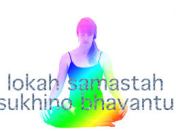
You still have doubts? Try isolating yourself from everyone for a few days; no talking, no smartphones, no interaction of any sort with anyone. That tells us how important other people and those interactions (the macro) are important to us. We use the macro as a mirror to look and assess ourselves, and gain an identity. Without that macro, the mirror, we lose ourselves. How quickly is the only remaining question.
Okay, that’s a little painful about not interacting with the macro; less demanding is to read up on what happens to prisoners that are kept in solitary confinement. They wilt like leaves separated from the tree; they typically try to commit suicide. Or for beginner level information, read up on the diaries of those who tried 5 or 10 day vipasana routine; note that vipasana is not complete solitary confinement.
Have no doubt, we are born connected, and long to lead a connected life. We feel most rewarded and satisfied when we contribute, and when the people around us notice that. That simple. So, yogis’ ask and coaching is just that – to contribute to the welfare of that tree to which we all are connected, the society, which in turn assures our (individual) welfare. Our attitude does not change permanently unless we keep at it. For continuation of this theme, and more, see their vision for the whole.
भद्रं नो अपि वातय मनः
(bhadraṃ no api vātaya manaḥ)
May we all be blessed with a vibrant mind_/\_/\_/\_
 Yogic Thought
Leave a comment