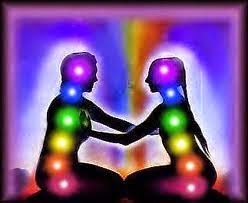
This is a huge topic in Yogic lore. We will break this down into four sections to cover it:
1. Brahmačarya as non-dualistic attitude
2. To channel “Sexual” energy to awaken Kundalini
– esoteric secrets of Tantric Kāmasutra!
3. Brahmačarya as Celibacy
4. Monogamy as Meditation
Why are we attracted to the opposite gender (or interested in pairing up) anyway? What happens at puberty? How is kundalini tied into all this? As we will see, the core principles of Kamasutra and tantra tie into this.
1. Brahmačarya AS non-dualistic attitude
Brahmačarya is typically translated as celibacy…, but it’s only a part of it. It does include celibacy in an important way but it is not the only thing – after all, masculine/feminine (Śiva/Śakti, or Puruṣa/Prakṛti), and male/female by extension, is one of the primal complementary pairs or polarities. And balancing them towards the neutral is the ultimate goal. Let’s start with the big picture, and then move onto “celibacy”, and some intriguing aspects of what we call sex. This subject consumed yogic thinking in a major way, because the ending is a pleasure-filled state. One quest is to find out what it takes to get stuck in that pleasure-filled state at the least, and more importantly to understand this phenomena to harness other hidden powers, if there are any. This unfettered thinking resulted in some incredible insights.
Patanjali also cites this power in Yoga Sutras(2.38):
“By one established in celibacy, potency/power is gained.”
But, full definition first.. Also review blurb #13 on what it takes to be in a blissful state of mind – in a way it’s pretty straightforward. Brahmačari is someone who roams around (čara) in the non-dualistic world of Brahman, and therefore practices a non-dualistic attitude towards all things and events, either pleasure-filled or painful. That practice is called brahmačarya – the practice of seeking Brahman. The most important part is to go beyond our normal automated judgments, which is a result of our “polarized” view of the world.
A siddha (adept) actually explains this to Krishna in Aswamedhika Parva section of Mahabharata (chapter 1861): A person who follows vows is always engaged in conquering the senses. There may be a person who abandons all vows and deeds and bases himself/herself on the brahman alone becomes a brahmachari. [For that person} the brahman is the kindling, the brahman is the fire, the brahman is the yajna, the brahman is the water, the brahman is the preceptor, as s/he herself/himself is submerged in that brahman. THIS is the subtle nature of brahmacharya.
Rapid automated decisions, actions and instincts do after all have a significant role in protecting us, but we also make a lot of unnecessary and unwarranted judgments. To do away with such unnecessary “judgments and decisions” is the crux of this practice (make noticing the judgements a practice for a week), for example. The logic is that most of our judgments are limited by the amount of information available to us, and therefore it is better not to make them unless it is absolutely required.
“Seeking Brahman” is a state-of-mind exercise. Just like all other yamas, this practice has layers to it. Back to our yama template – no right or wrong, or right levels… Contemplate, set practice goals, practice; rinse, repeat. Recognizing situations where we are actually making a judgment is the natural first step.
The second half of the story of Brahmačarya is celibacy… Regardless of the exact meaning, for men at least, celibacy is worth contemplating on, because of the way the second chakra functions. This is one area where the emphasis of the practice differs for men and women. Women are apparently more mature!
Yogis were mesmerized by this phenomena, and wanted to understand everything about it. Probably there’s no other group of thinkers that spent more time and energy in understanding the complete story of sex than tantrics. Here’s the bottom line: orgasms are very expensive! We delve into this a little further down. They have a huge physical and spiritual energy expenditures associated with them. Use them wisely is their message.
Indian mythology is filled with stories of male-yogis inadvertently losing control (implying the natural wiring of this polarity in our psyche, and the superhuman strength of this “force”) and depicting the powers of this practice. They have a special class of feminine characters called apsaras, which refers to feminine beings that emerge out of apas (cosmic waters), to disturb celibates by making them “spill” their seed. They are also related to female characters popping up in our erotic dreams (in men)… Nothing mystical about these things. Adepts in meditation traverse all these states of consciousness including dream states. This is a routine theme in vedic literature and several key god-like figures emerged through this route; for example the famous Vasistha is born that way.
In an interesting story in Rig Veda (1.179.4-5), Rishi Agastya somehow ends up having coitus with his wife before his meditation session of many years is completed. According to that recipe, the sperm is not completely baked. He regrets loss of control, but because he is such an adept, he gets back to practice and returns to the previous meditative state… [based on Wendy Doniger translation]
…lopāmudrā vṛṣaṇaṃ nī riṇāti dhīram adhīrā dhayati śvasantam
Lopamudra exhausts the potent bull (her husband Agastya); the unsteady woman exhausts the panting wise man…
imaṃ nu somam antito hṛtsu pītam upa bruve | yat sīm āgaś cakṛmā tat su mṛḻatu pulukāmo hi martyaḥ ||
[Agastya says] By this soma which I have drunk in my heart, may it fully expiate the sin we have committed; man is subject to many desires.
2. Kundalini: Spirituality and Sexuality
Some of the fundamentals of energy expenditure is covered in Section 4, but let’s get to the dessert part – how are sex, spirituality and Kundalini related?
The principle is simple – for peak experience (what we call Orgasm), a downpour of nervous energy tumbles down from the head to the root and sacral chakras. If we know our locks right, we can reverse the nerve current flow upwards. Once we pinch the channel with locks, a kind of ping pong movement of energy develops, and eventually stabilizes in higher chakras, leaving the practitioner euphoric and “superconscious”. These techniques, unfortunately for us, are kept secret. Below are some additional notes.
The Right and Left-Handed Paths
Time was when I despised the body;
But then I saw the God within
And the body, I realized, is the Lord’s temple
And so I began preserving it
With care infinite
(Thirumoolar, a 7th Century AD adept, in Thirumandiram 725; trnsl. by B. Natarajan)
Basically modern society has a schizophrenic attitude towards sex. Body and the body generated carnal desires are also god-created, just like how a desire to pray emanates…
Kundalini can be awakened by both ways apparently. The “Spirituality”-based methods are grouped under the Right-Handed category (vama Marga), while the Sexuality-based methods are grouped under the Left-Handed category (Dakshina Marga). The former accentuates and uses the feminine within, while the latter uses the readily available, nature-granted, external feminine. Rishis teach that Spirituality and Sexuality are two sides of the same coin.
This is a summary blurb trying to capture the essence of a vast and rich Tantric literature. Also, not all available information is coherent or clear, primarily because of the deliberate obfuscation, and the disdain for this method from very early times, unfortunately. In the process we only have a few practicing ashrams, preserving only a few techniques that they inherited.
This left-handed method is a higher risk, but faster method whereas the spiritual methods are a little slower but safer. Some modern Indologists think that this science was actually perfected by female practitioners (tantrikas), at a time when male trantriks ignored this as the inferior method. Lilian Silburns’ book on both these tantrik methods is an excellent starting point and a source of references; she spends half on the Spiritual and half on Esoteric methods, with focus on Kundalini awakening.
In one of the tantrik dialogs cited in this book, Siva answers Sakti’s questions:
Q: Who is to be worshipped?
A: Woman (as śakti)
Q: Who is the worshipper?
A: Man
Q: What are the incense and oblation?
A: Embrace and Caress…
Q: What’s the “ritual fire” pit?
A: The Womb
….
The bottom line is our ability to generate, unify and direct the internal energy is the basis for kundalini awakening. In most of us, this Kundalini energy is in dormant potential form, and we get only a glimpse of it during the peak-experience. Orgasms essentially end this energy build up prematurely, with a meek lightening streak, while the charge has to built up several fold to achieve the full lightening effect. Kundalini is like a boulder close to the edge of a cliff, but on a small flat area. It needs that driving motion to gain the necessary momentum to roll off the cliff.
What generates this in each one of us could be different. Any strong emotion works apparently – intense animosity, intense liking to intense love-making…, anything intense works. These are called spillover mechanism in the modern neurological literature. The intensity-aspect is the key, and not the specific emotion! Intense emotions hyper-activate the mid-brain, which controls several key switches. We all know and have emotions, but where do we get the “intensity” from? This contemplation is about the left-handed “tantric” approach, which takes advantage of the “body” aspect.
This Left-handed path also involves the rajasic five M’s- madira (wine), matsya (fish, probably of aphrodisiac variety), māmsa (meat, to power the churn), mudra (gesture to guide the energy, attitude or some special grain), and maithuna (opposite gender for intense “twinning or coupling”). All are of specific types, and pre-prepared in a detailed way. How much of each kind at what point in a long sequence is all part of the secret recipes.
Q: Okay, eating, drinking and doing all this, what happens?
Yogis: The union of Siva and Sakti occurs in Sahasrāra, which is sustained for a long period.
The key is that through intense “churning” (manthana), nerve currents max out, and in all this, the sense of touch (sense organ associated with “Air” element) gets hyper-sensitive. And at the peak, something called “Udāna” vāyu or a vertical current gets activated in the central channel of the spine. This Udāna Vāyu flows upwards, towards the higher centers in the brain. (Vāyu or Element Air translates to nerve currents here.) During normal orgasm, apana vayu prematurely ends it by the normal biological process of ejaculation.
During this time, if the “Sōma” chakra, a subsystem of the Sahasrāra, is also activated, something special happens apparently. The orgasm-inducing nerve currents initially begin to flow down. But the root lock and other allied locks do not allow the final physically-manifested component, śukra or reproductive material, to be released. This forces the Sōma dropping down to be reflected and reverse, whereby the “reproductive” energy starts moving up… Through a mudra called Vajroli mudra, which also controls the Vajroli nerve that extends into the genitals, this energy current is reflected upwards before it reaches the solar plexus. The fire element around the solar plexus (Jaṭhara-āgni) otherwise destroys this current (or initiates the physical semen release). The upward flowing reproductive energy current is called “ūrdhva retas”.
When these reflections continue between the sahasrara/soma chakra and the root/diaphragm/throat locks, with time, the energy multiplies and the resulting momentum wakes up the full Kundalini; due to the pressure and upward moving impetus around, it also starts to flow upwards (ūrdhva-kundalini), and this Śakti meets Śiva in the seventh chakra – the cosmic union! The cosmos is within! Tat Twam Asi! Although all the terms may sound mystical, they are very much accessible to each and every practitioner. We just need to translate the words into modern language, with the help of a guru.
The entire 9th chapter of Rig Veda is devoted to this phenomena of Soma! Even though our focus here is sexual energy, Soma is the elixir we all seek, and we all came with that soma-generating machinery included. We just need to know how to access it, by reading the ******* manual!
As a side note, a laser beam is also generated a similar way. A small amount of light is introduced into a gain or laser medium, in which a chosen light frequency survives and is reflected between two mirrors several million times. This process generates a single frequency coherent radiation that we call “laser”. The energy amplification through stimulation, in a controlled medium, a crystal or a gas, and coherent energy at the end, all seem to be common to both! In the left-handed path, it’s the Sōma current that we seek to amplify. The accumulating sōma circulates through the body by another vāyu-current called “samana” vāyu or equalizing current, which is also a result of the strong udāna vāyu, apparently.
Hmm…, okay, maybe the other path is easier:)
Q: How’s all this achieved in the “Right-handed” path?
Yogis: Through Pranayama for upward currents, and internal feminine for Soma – the intense coupling and balancing occurs between prāna and apāna vāyus to generate “udāna”. Thus prana and apana currents are the two fire-sticks (āraṇi), that generate fire on rubbing, through friction. The rest of the story is similar.
It is this Sōma that rishis revered, prayed to, and offered all sorts of oblations to make it flow. Huge chunks of vedas are dedicated to this. It is that nectar, amŗta. It is this, when accumulated in sufficient quantities will push us up on the bliss-ladder that Taittiriya Upanishad talks about in Ananda-valli(recited in The Neurobiology of Bliss blurb).
Normally, the kundalini is flowing downwards from uvula to root chakra and out into nature, called adha-kundalini. The obvious goal is to reverse this flow and sustain the energy at the seventh chakra.
This is the yajña of left handed tantriks – the firewood (āraṇi, the pair engaged in the union), the oblation (sōma and śukra), the fire pit (womb), the transformational agent agni (the consciousness), presiding deities, Śiva and Śakti … All common elements to both spiritual and esoteric, and the internal and external ritualistic practices. Tat-Twam-Asi – the duality is just a limitation of our mind. Brahmačarya is to transcend that, and good luck to all of us seekers on that path_/\_
3. Brahmačarya (Celibacy)
Why give up a built-in natural mechanism for pleasure? Waiting till puberty isn’t good enough? There better be something at the end of this celibacy-tunnel, right? There is… and, yogis don’t exactly ask us to give it up completely anyway, but it is the obsession that they want us to get rid of. Also, at puberty, there are mechanical changes that occur in the physical body, to go with the changes in the mind field. Brahmacarya includes practices to control those valves, and all the ingredients that go into producing the reproductive material and where that material goes is at the center of this contemplation.
Anyways, Yogis also imply that this practice is a little more critical for men than for women, although the concepts are equally important for women.
Yogis particularly advise celibacy during the learning stage of life. Reason? Once an orgasm is experienced, untrained minds become obsessed with having more of that. Especially when we are untrained, the easiest way is to seek the opposite gender to achieve that. At the psychological level, this causes dispersion (vikshepa), and everything else falls by the wayside.
Again, yogis don’t advise us to give up sex completely, but there are cost-benefit trade offs that they want us to note.
Interestingly, the god of generating this desire is called Kama-deva, and he carries around a bow, and a quiver with five arrows. You can see the dichotomous nature of this desire (source: Google)
-
Lambini: This arrow represents the initial attraction and fascination that one feels when experiencing love or desire.
-
Tapini: This arrow signifies the emotional disturbance and turmoil that love can bring.
-
Dravini: This arrow symbolizes the burning passion and intense emotions associated with love.
-
Marini: This arrow represents the withering or fading love, or even parching!
-
Bodhini: This arrow signifies the destructive potential of love, which can lead to obsession, or purely destruction of the body and mind.
See the story of Vichitra-virya (his translated into English is “a man with strange virility” above.
How many times can a man reach that peak experience, i.e., the orgasmic state in a day, for example? What’s limiting that number? How do we change that limit? Let’s tug on the physical limitation thread – at the physical level, the “peak experience” impacts the Basal Metabolic Rate and the aging process.
From a control standpoint, it’s the Root Lock that’s the enabler, which was the motivation for the Root Lock-focus in kundalini yoga practices. It’s actually most effective for pre-puberty kids. Also, at no point should celibacy involve repression. We will see why in the near future…
Let’s summarize it in the form of some key questions and rishis’ hypotheses for our contemplation. Starting from where we last left off:
Q: So why are we attracted to the opposite gender?
Yogis: Masculine/feminine split is one of the first to occur in the macro. We are either masculine-excess (male) or feminine-excess (female), and it is this excess that drives us to the opposite. Physical traits, including the endocrinal traits, are only a part of this make-up. The mind (manas) and buddhi (intellect) also play a significant role, and they all line up accordingly to give us a gender-identity. It’s a continuous spectrum rather than a simple binary (M/F) determination – body can be built one way but the brain can be wired differently, so on and so forth.
This excess seeks to pair up with the opposite to reach that neutral state – back to our “wholeness” paradigm. Regurgitating one of the conclusions from the “Neurobiology of Bliss”-blurb, “I” dissolves away during this neutral state, which we call orgasm/peak experience. This is very analogous to how insentient beings act too, which is based on their polarities – neutral states are the most stable… Such chemical processes actually run our microcosmic bodies (twam) as well as the macrocosmic world (tat).
Q. What’s the cost-benefit trade off for normal sex, aka the true price of “peak experience”?
Yogis: Basal Metabolism Rate, and compromised Rejuvenation. BMR is the good old energy argument that we talk about all the time – yogis give us several reasons why low BMR is a preferred state. The second one, Rejuvenation, is about internal healing that aids in protecting the body, and in slowing down Aging.
In the science of yogic medicine, Āyurveda, there are seven components or dhātus that makeup our bodies: 1. Rasa (blood plasma), 2. Rakta (blood cells), 3. Māmsa (muscle tissue), 4. Medha (adipose tissue), 5. Asti (bone), 6. Majjā (marrow, nerve tissue), and 7. Šukra/ Ārtava (male/female reproductive material). Food is the main raw material for all this, and fire element (Agni) in its various forms is the transformational agent.
It takes a total of 35 days to form “stable” Šukra, i.e., stable reproductive material from food; 5 days for each of the 7 dhatus in that chain. From the precursor dhatu, the “unstable” form of the next dhatu forms first, and then it takes some more time to form the “stable” version of that dhatu from the unstable version. So for example, it takes 12 hours to form “unstable” Rasa from food, and 5 days to form “stable” Rasa from food.
So, if one wants stable Šukra, it takes 7 x 5 = 35 days. The demand for reproductive material translates back to demand for dhatus 1 through 6… Of course, we eat everyday, so we make Šukra everyday. But the more we use, the more we have to eat, means the factory has to work that much more, resulting in a higher BMR.
This 35-day calculation also ties into the yogic method of conceiving the best offspring one could …. Another topic for another day.
Q. How’s sex related to “Aging”?
Yogis: This has to do with the frequency of seeking “peak experience”. The pecking order when it comes to our internal resources, as ordained by nature, is clear – reproductive material gets the best, and then the rest. Because of the high priority our bodies put on the quality of the reproductive material, it not only raises the metabolic rate, but produces it at the expense of internal healing and nourishment functions. In addition, the body is forced to use some of the “unstable” material for these dhatus. This is the main culprit in the aging process and suboptimal offsprings – body ignoring internal rejuvenation function.
According to yogis, it is the amount of this vital resource released that actually determines the youth/potency/virility of a living being, while it’s the number of breaths taken that determines the age. In some creatures, reproductive is one of the last acts! In summary, rejuvenation and reproduction are two sides of the same body force- Ojas. Ojas is also known as the “sap of life”.
In Ayurveda, Ojas, Tejas and Prana are three fundamental interconvertible forces, where Ojas is the subtle essence of the reproductive material, which also drives the immune function… The uber-power of immune system was apparently well known to them.
In the great epic of Mahabharata, the young king Vichitravirya dies of phthisis, which was a result of his relentless pursuit of amorous activities that apparently lasted for 7 years! In Ayurveda, phthisis is a consequence of weakened immune system, which resulted from all the sex in this King’s case.
Q. How is celibacy tied into yogic lifestyle?
Yogis: In four-part division of the human lifecycle, the first phase is the “student” phase (brahmacarya), which is supposed to focus on acquiring tools required for leading a good life, including producing a good offspring. In this phase, yogis’ approach for kids included:
- Delaying puberty, by strengthening the Root Lock.
- Conversely, once a kid hits puberty, s/he was deemed ready for the second stage of the lifecycle, gruhasth (house-holder). All the learning was to be completed by this time.
- Avoiding the knot formation in psychic body – as the knot at the brow point starts to form (Rudra-granthi), about the same time as when the pineal gland starts to calcify, kids were initiated into yoga practices to counter that. This ceremony was called Upanayana (a form of baptism), and this practice in namesake takes place for boys even now. This initiation typically occurred at around the 9th year. Both boys and girls used to go through this, in that system.
- Training in Yamas and Niyamas. Learning to do everything consciously, including asking the right questions, was a highly valued skill. All six philosophies (Sat Darshanas – intuitive”visions”) were taught, starting with materialism, empiricism, dualism, all the way to non-dualism.
Our actions and inferences arising from both unconscious instincts and conscious analysis could be the same, but it’s the latter that yogis ask us to strive for, for obvious reasons – preparedness for the entire chain of consequences. Yama and niyama contemplation paves that path of preparedness!
Q: What makes Celibacy a Yama?
Yogis: Male/female splitting is a very powerful duality perceived by our mind. This duality arises from our default “unconscious” view of the world (NotMine) – therefore it’s a Yama (Me-NotMine relationship). Getting over this duality takes a superhuman effort in training the mind. Left up to itself, Nature’s default program is to make more of everything to ensure survival of individuals: more unmanifest to manifest.
Let’s consider Master yogi Krishna’s coaching to Arjuna in Gita (3.27), while discussing Karma Yoga: “Nature does everything through us…”. Yogis take every opportunity to coach us that we have to be “awake” to gain control.
4. Brahmačarya: Monogamy AS A Meditation
In a nutshell, Monogamy is all the key elements of Celibacy plus Meditation…
This advanced concept extends the Brahmačarya practice into the house-holder stage. At the practical level, this is a continuation of the story of Root Lock (Moola Bandha) and the second chakra. The difference is that the root lock is open by default during Monogamy, requiring a higher degree of control. During celibacy, the goal is to preserve the closed root lock as is. In that sense, monogamy is little more sophisticated than celibacy. All this is to channel the kundalini in the right direction when that energy finally awakens.
Digging a little deeper, how can having a partner be more difficult than having none? Yogis answer lies in the word “single” – single spouse not just in the legal sense, but from a body-mind-intellect sense. A single partner permeating all three spheres. Essentially, that single partner has to become the true soulmate – merger should occur at the “self” level apparently. Yogis use this full definition for monogamy.
Thus, Monogamy is all the key elements of Celibacy plus Meditation, rolled into one. In this practice, the object of a man’s individual meditation is his spouse. Yogis give us another hint – all men have two wives!! Bhῡ-devi and, Śrī-devi analogs; Śrīdevi-analog is the wedded wife. We will circle back to this in a bit…
Looking at it from a modern psychology standpoint – the Unconscious has six bins apparently – just six. If we accept that, we group everyone we meet, see and think of into those six bins – mate, hate (disgust), nurture, be-nurtured, attack, submit. For men, that first bin, the mate-bin is huge, with memory buffers probably overflowing. Let’s blame the second chakra function in the psychic plane for that. Mother-figures fall into the “be-nurtured” bin, while the daughter-figures fall into the “nurture” bin. Having the image of that single-partner in the mate-bin is the crux of Monogamy practice.
So, that’s how Monogamy is Celibacy plus Meditation, rolled into one. And, this is how a householder can be married and still be a yogi, without having to recede into the jungles. This is probably a lot more difficult than relinquishing everything and going away to meditate…
Modern society readily accepts looksies, but yogis imply that there is a price to be paid for that, and we pay for it in our weak moments. These images fill up the mate-bin, and show up in dreams. The Unconscious swaps the stored images, one for another within each bin, without any consideration for external relationships. That’s why apparently faces keep changing rapidly during dreams. So, control of dreams is also essential for this practice.
In addition, at the physical level, the root lock is open during this house-holder phase. So, mind has to be in full control of this lock. Therefore, from a practice standpoint, we need to (re)gain both physical and psychological control of “Root Lock”. That’s why yogis call this the “master key”. We had the physical part in place before puberty.
Going back to Rāmayana, during their exile, Rāma practices Monogamy while his younger brother, Lakshmana, follows Celibacy. That depiction is pretty interesting given the hierarchy in difficulty of the practices. Another interesting part about Rāma’s practice is that there was no physical sex involved during this fourteen year exile, even though his wife accompanied him – no kids! Rāma and Sīta consummated their marriage only after their return back from the jungle to society (Ayodhya). Rāma’s meditation was to empty out of the mate-bin and keep it focused on his wife, Sita. Because, in monogamy, during coitus, the man’s mind must be filled with his spouse only and no one else.
That’s why in mystical versions of Ramayana, there’s so much debate about the three women Rāma encounters directly – Taṭaki, Surpaṇakha and Ahalya. These women are supposed represent the natural (feminine) forces, tamas, rajas and sattwa, respectively…
Now, how does every man have two wives? Yogis define wife as anyone who receives reproductive material from the man, and can bear his children. There are two main channels through which a man releases his reproductive material – to the wedded woman (Śrī), and to nature/earth (Bhῡ) through autoerotic activities. The second channel also includes “nocturnal emissions”, which occur during sleep. The autoerotic channel does not get a free pass in yogic thought. Thus all men have two wives – Śrī-devi and Bhῡ-devi analogs. This is about men. Women? All husbands are consciously chosen. The other nature-channel cannot produce offsprings. Therefore, earth can be a co-wife, and not a husband.
So, is Earth mother or a wife to yogis? Earth (and nature) plays several roles, like all other elements, like Fire, Sun…. Monogamy allows one to incorporate earth into the “be-nurtured” bin.
How can Earth (nature) produce an offspring with a man? Apparently, the reproductive material of normal men is not powerful enough, and is ineffective towards Bhῡ-devi analog. But at least in mythology, there are several rishis that produced offsprings through this channel! Celebrated character in Mahabharata, Drōna and several others, were apparently born this way, where an earthen pot acted as the womb. For anther example, Sage Suka (the one with perfect memory) was born out of the vedic pyre when Veda Vysa was attracted to the apsara Ghritachi, and discharged his semen on to the wood Sticks meant for Arani (Arani is one of the two ceremonial rubbing-sticks used to ignite the sacrificial fire). Out of this discharge was a son born…. Ādi parva (1st chapter) of Mahabharata has several instances of that. It’s not important whether those stories are historically real or not, but it’s more important for yoga students to be cognizant of this channel. And reproductive material is such a valuable resource that its expenditure is to be controlled even in the dream state.
Kundalini strength and awakening relies upon this. How’s all this tied into Kundalini? We will wrap up this long contemplation with that next…
But for now – root lock, root lock, root lock…!
May we all be blessed with a vibrant mind_/\_/\_/\_

 Yogic Thought
Leave a reply to 51. Being Happy – Prāṇa – Yogic Thought Cancel reply